
What You Need To Know
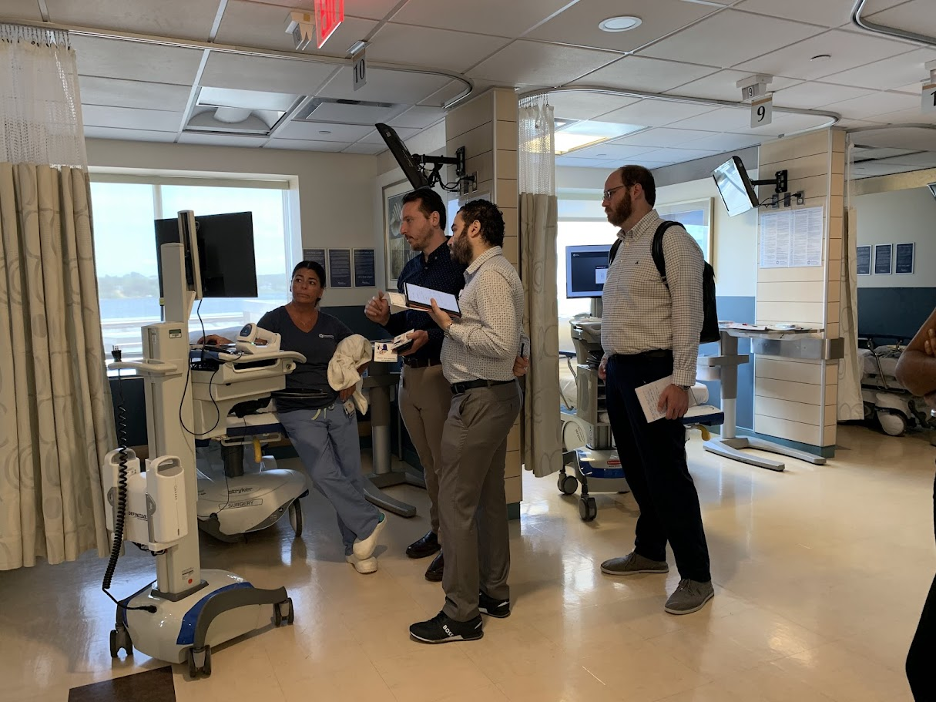
Since coming together as a centralized team as part of Digital Technology Services, the Clinical Informatics (CI) team has focused on streamlining clinician documentation and reducing time spent in the electronic medical records system in order to increase time with patients and their families at bedside.
For care providers, CI’s “Dump the Junk” program resulted in:
- Flowsheet macros that decrease the amount of time nurses spend in the system documenting commonly charted items.
- Automation of ambulatory specialist notes sent to referring physicians resulting in improved communication and improved patient care.
- The Nursing Assignment Wizard that makes patient assignment workflows easier by giving charge nurses access to many key deciding factors including nursing workload acuity.
- 70-percent overall reduction in interruptive practice alerts shown to nurses and doctors.
Now the CI team is launching its new initiative, Thrive at the Bedside, which will provide tips and tools to enhance team members’ Epic experience.
To offer suggestions, click here or to learn more, email: dgclinicalinformatics@hmhn.org.
Since coming together as a centralized team as part of Digital Technology Services, the Clinical Informatics (CI) team has focused on streamlining clinician documentation and reducing time spent in the electronic medical records system in order to increase time with patients and their families at bedside.
For care providers “Dump the Junk” program has resulted in:
Flowsheet Macros that decrease the amount of time nurses spend in the system documenting commonly charted items. Nurses and other clinicians now use macros to document common sets of data in flowsheets. “Personalized Macros have been a game changer for me, decreasing the amount of time I have to spend in the system documenting commonly charted items. Making multiple macros for all areas of the flowsheets allows me to quickly chart significant portions of my documentations with a single click. This allows me to spend more time doing the things that nurses find meaningful, allowing more time to care at the bedside instead of in front of the computer,” said SOMC’s Anthony Corso, MSN, RN, CCRN, CMSRN, GERO-BC.
Improving OPA Response: An ED Flowsheet-Based Approach: Collection of Height and Weight in Emergency Department triage is an essential part of the intake process. A best practice advisory has long been the solution to encourage clinicians to obtain a height and weight if missed during triage. This BPA was often cited as both interruptive and annoying during CI rounds. A new flowsheet based task functionality now notifies ED nurses a height and weight is still required. “Although this is important for overall care, in the triage it was a barrier to getting the patient to the care. Thanks for hearing the clinical staff and addressing our concerns,” an HUMC ED registered nurse said.
The Nursing Assignment Wizard that makes patient assignment workflows easier by giving charge nurses access to as many key deciding factors as possible in one place. This includes patients' location on the unit, nursing workload, patients per nurse and patients who are expected to transfer in or out during a shift. RBMC ICU piloted this tool starting in May 2023 and Smart Square Interface went live in July 2024 improving functionality and streamlining the workflow. Implementing this tool network wide has the potential to reduce a significant amount of administrative burden and nursing time
Automation of Specialist Notes Sent to Referring Providers which allows for faster communication between physicians. Notes are automatically routed from office visits to referring physicians and PCPs.
This improves patient care, as referring physicians receive closed loop communications detailing specialists’ assessment and plan. This also saves hours of manual effort on the behalf of physicians and office staff, removing the need to manually route the notes to patients’ referring physicians and/or PCPs.
Capacity Management dashboards that facilitate throughput throughout the network’s hospitals. “I am absolutely loving all of the new Epic tools and dashboards - particularly the Discharge Monitor. Thanks for the tip on the Patient Flow Expediter, I've been playing around with it and it is definitely adding solid information for my team”, said a Jersey Shore UMC Capacity Management manager.
Now the CI team is launching its new initiative, Thrive at the Bedside, which will provide tips and tools to enhance team members’ Epic experience.
To offer suggestions, click here or to learn more, email: dgclinicalinformatics@hmhn.org.