
What You Need To Know
Key Points
- Meningococcal disease, which typically presents as meningitis or meningococcemia, is a sudden onset, life-threatening illness caused by the bacterium Neisseria meningitidis. Prompt antibiotic treatment can reduce morbidity and mortality among patients and antibiotic prophylaxis can prevent secondary disease in close contacts.
- Cases of meningococcal disease in the United States (US) have increased sharply since 2021 and now exceed pre-pandemic levels. In 2023, 422 confirmed and probable meningococcal disease cases were reported in the US; this is the largest number of US cases reported since 2014. To date in 2024, 326 cases have been reported to CDC. Neisseria meningitidis serogroup Y drives much of this recent increase.
- Due to increasing ciprofloxacin-resistance, alternative antimicrobial agents are being recommended for post-exposure prophylaxis in certain areas within and outside the US.
- Healthcare providers can consider alternative agents for post-exposure prophylaxis for contacts of cases of invasive meningococcal disease.
- Treatment recommendations for suspected or confirmed invasive meningococcal disease have not changed. Antibiotics should be started as soon as invasive meningococcal disease is suspected.
- Ensure that all people for whom meningococcal vaccination is recommended are up to date with their meningococcal vaccinations.
- Cases of invasive meningococcal disease are immediately reportable. NJ Communicable Disease reporting requirements are available here.
- Cases must be reported to the local health department where the patient resides. If you are unsure which local health department should be contacted, use the locator tool.
Background
Invasive meningococcal disease is a rare but severe infection caused by Neisseria meningitidis that can present with meningitis, bloodstream infection, septic arthritis, or pneumonia. In the United States, approximately 10 – 15% of cases are fatal. Providing prompt antibiotic treatment for cases and antibiotic post-exposure prophylaxis to close contacts of people with invasive meningococcal disease is an essential disease prevention strategy.
Surveillance & Recommendations
The New Jersey Department of Health Vaccine Preventable Disease Program is providing an update to public health and healthcare providers regarding the increase in invasive meningococcal disease and the presence of ciprofloxacin-resistant strains of meningococci.
US cases of meningococcal disease have increased sharply since 2021 and now exceed pre-pandemic levels. In 2023, 422 confirmed and probable cases were reported to the CDC. This is the largest number of US cases reported since 2014. To date in 2024, 326 cases have been reported to CDC. Neisseria meningitidis serogroup Y drives much of this recent increase.
People disproportionately affected by this increase include:
- People between the ages of 30 and 60 years
- Black or African American people
- Adults with HIV
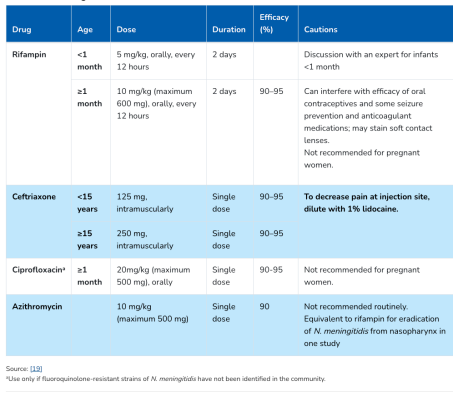
Ciprofloxacin has been a first-line agent for invasive meningococcal disease post-exposure prophylaxis; however, due to increasing rates of ciprofloxacin-resistance among invasive meningococcal disease cases, ciprofloxacin is no longer recommended as post-exposure prophylaxis for close contacts in certain areas with ciprofloxacin resistance. In June 2024, the CDC provided guidance to preferentially use rifampin, ceftriaxone or azithromycin for prophylaxis of close contacts of Saudia Arabia travel-associated cases. Jurisdictions within the US have likewise seen an increase in ciprofloxacin resistant Neisseria meningitidis and have made a recommendation to discontinue the use of ciprofloxacin as post-exposure prophylaxis. Several jurisdictions in the US including areas in California, North Carolina, Virginia have made the recommendation to discontinue the use of ciprofloxacin as post-exposure prophylaxis. On August 14, Connecticut, New York State, and New York City made the recommendation that healthcare providers discontinue the use of ciprofloxacin as post-exposure prophylaxis based on their surveillance data.
In New Jersey, since January 1, 2024, 15 cases of invasive Neisseria meningitidis disease have been reported: 9 serogroup Y (60%), 4 serogroup B, 1 W135 and 1 unknown. One of the 15 cases, one was caused by a ciprofloxacin-resistant strain. For a 12-month period (August 2023 – July 2024), 25 cases of invasive meningococcal disease have been reported in New Jersey; of those 2 (8%) were caused by ciprofloxacin-resistant strains. At this time, the Vaccine Preventable Disease Program continues to recommend ciprofloxacin as the first-line agent for post-exposure prophylaxis; however, considering frequent cross-jurisdiction and international travel, it is likely that additional ciprofloxacin-resistant cases will be identified in New Jersey. Healthcare providers caring for cases of invasive meningococcal disease should take a detailed travel history as this might influence the choice of antimicrobials prescribed for close contacts. Please note that no known instances of close contact prophylaxis failure in the US have been reported. The Vaccine Preventable Disease Program will be following the surveillance data closely and may update these recommendations. Please check the New Jersey Department of Health Meningococcal Invasive Disease page frequently as this is an evolving situation and recommendations might change.
Providers should maintain a heightened index of suspicion for meningococcal disease among Black persons ages 30 – 60 years and should be aware that patients with meningococcal bloodstream infection or septic arthritis may present without typical meningitis symptoms.
Treatment recommendations for suspected or confirmed meningococcal disease have not changed. It is crucial to start empiric antibiotic treatment promptly when invasive meningococcal disease is suspected. Do not wait for diagnostic testing.
Vaccination is a key tool for preventing invasive meningococcal disease. Healthcare providers should redouble their efforts to ensure that all persons eligible to receive meningococcal disease are vaccinated in accordance with the recommendations of the Advisory Committee on Immunization Practice. All adolescents and others at increased risk including those with HIV, asplenia, sickle cell disease, complement deficiency, and those taking complement inhibitor medications are recommended to be vaccinated. Although a vital tool for preventing disease, post-exposure prophylaxis is recommended for close contacts of people with invasive disease regardless of the contact’s vaccination status.
Post-Exposure Prophylaxis for High-Risk Contacts of People with Invasive Meningococcal Disease (CDC Surveillance Manual).
Additional resources
- NJDOH Meningococcal Disease Website
- New Jersey Department of Health Vaccine Preventable Disease Program, Immunization Requirements
- CDC Meningococcal Disease Website
- CDC Meningococcal Disease Surveillance and Trends
- Nationally Notifiable Infectious Diseases and Conditions, United States: Weekly Tables/meningococcal disease
- MMWR Detection of Ciprofloxacin-Resistant, β-Lactamase–Producing Neisseria meningitidis Serogroup Y Isolates — United States, 2019–2020
- Cases of Meningococcal Disease Associated with Travel to Saudi Arabia for Umrah Pilgrimage — United States, United Kingdom, and France, 2024
- Selection of Antibiotics as Prophylaxis as Prophylaxis for Close Contacts of Patients with Meningococcal Disease in Areas with Ciprofloxacin Resistance – United States, 2024, MMWR
- NYS and NYC Provider Advisory: Discontinue Use of Ciprofloxacin for Invasive Meningococcal Disease
- CDC Vaccines and Immunizations
- CDC Vaccine Recommendations and Guidelines of the ACIP